



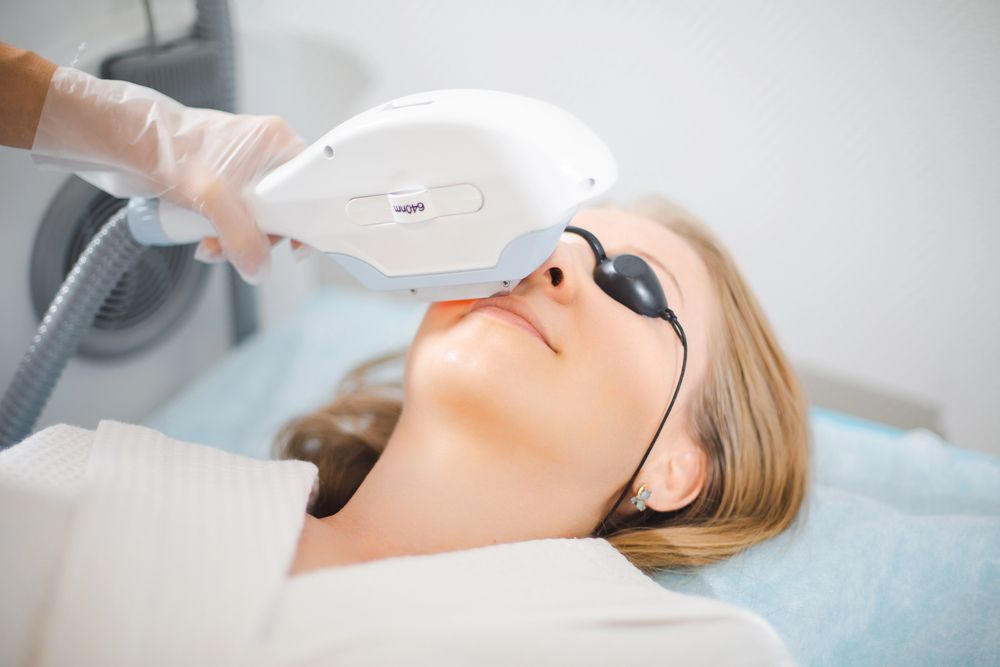
Morpheus8 Treatment Depth: Why Deeper Isn’t Always Better
Morpheus8 treatment depth is the distance microneedles travel into the skin before releasing radiofrequency energy, set in millimeter increments and chosen per treatment area.
Deeper settings do not produce better results. Depth is matched to the tissue layer that needs remodeling, and heating past that layer adds risk without adding benefit.
The Morpheus8 program at Med Aesthetics Miami sets depth zone by zone rather than applying one number to an entire face.
Key Takeaways
- Morpheus8 facial tips reach approximately 4mm of needle depth; the 40-pin Body tip reaches 7mm plus roughly 1mm of thermal profile.
- Needle depth, thermal profile, and energy are three distinct variables, adjusted together and re-evaluated at each session.
- Excess depth on the mid-face can reduce subcutaneous fat and create hollowing.
- The FDA issued a safety communication on radiofrequency microneedling devices on October 15, 2025, citing burns, scarring, fat loss, disfigurement, and nerve damage.
Sagging along the jawline rarely needs the deepest setting. Rosanna Bermejo maps depth zone by zone at a Med Aesthetics Miami consultation appointment.
What “Treatment Depth” means in Morpheus8
Treatment depth is how far the coated microneedles penetrate before delivering radiofrequency energy into the tissue. Different depths reach different layers — epidermis, dermis, and subcutaneous fat — and each layer responds to heat differently, so the target layer determines the setting rather than the other way around.
Three separate variables govern a Morpheus8 pass:
- Needle depth — where the pins stop, measured in millimeters.
- Thermal profile — where heat extends beyond the pin tips, roughly one additional millimeter.
- Energy — how much radiofrequency power is delivered at that position.
A shallow pass at high energy and a deep pass at low energy produce entirely different tissue effects, which is why the three settings are chosen together rather than in sequence.
The tip constrains the available range. InMode’s device documentation describes four fractional configurations: the 12-pin Prime tip for small, precise zones; the 24-pin Morpheus8 tip for larger facial areas; the 24-pin Resurfacing tip for superficial work; and the 40-pin Body tip, which reaches 7mm of needle depth plus its thermal profile.
The layer map below reflects how Bermejo assigns depth ranges at Med Aesthetics Miami.
| Needle depth | Layer | Objective |
| 0.5–1mm | Superficial dermis | Texture, pores, fine lines |
| 2–3mm | Reticular dermis | Laxity, collagen remodeling, scars |
| 3–4mm | Deep dermis, subcutaneous | Jowls, neck, body contouring |
How does a provider determine the appropriate Morpheus8 treatment depth?
The provider assesses the skin visually and by touch before selecting any setting. Skin thickness, degree of laxity, and anatomical location determine how deep the needles should travel, and no default number applies to every patient.
Bermejo describes her assessment method plainly: “I look at the skin, and then I pinch it to determine the depth.“
The pinch is a manual reading of dermal thickness and subcutaneous volume. Skin that tents easily between the fingers signals a thinner dermis to Bermejo, while dense or fibrotic scarred tissue supports deeper placement.
Visual assessment adds texture, scarring pattern, pigmentation, and prior treatment history to that picture.
Depth is not fixed for the course. Skin condition changes as collagen remodels over a series, so the assessment repeats at each visit, and settings shift accordingly—which is why session planning matters as much as the first appointment.
Are different depths used on different areas of the face?
Yes. Facial skin varies in thickness from under a millimeter at the eyelid to several millimeters at the jawline, so depth changes zone by zone within a single treatment rather than staying constant across the face.
The zone sequence below describes how Bermejo works through a full-face treatment at Med Aesthetics Miami, adjusting the setting repeatedly within one session:
- Forehead and temples — thin skin stretched over bone, treated at shallow settings.
- Periorbital and under-eye — the thinnest facial skin, receiving the shallowest depth and the lowest energy of any zone.
- Cheeks — treated shallower than most patients expect, unless acne scarring changes the objective.
- Nasolabial and perioral — mid-depth, where dermal remodeling addresses folds and lip lines.
- Jawline and jowls — the deepest facial zone, where laxity and small subcutaneous fat pockets sit.
The difference between facial and body protocols follows the same logic scaled up, so patients treating both areas can expect two distinct approaches in the same treatment plan.
What happens if Morpheus8 is performed too deeply?
Treating too deeply delivers radiofrequency heat into tissue that should not be heated at that location. The FDA safety communication on radiofrequency microneedling, issued October 15, 2025, documents reports of burns, scarring, fat loss, disfigurement, and nerve damage, some requiring surgical repair.
The specific failure modes are well described:
- Subcutaneous fat volume loss — radiofrequency energy in the fat layer coagulates adipose tissue, and on the cheeks or mid-face, this can produce hollowing.
- Track marks and grid patterning — excess depth combined with high energy can leave persistent needle-pattern texture or indentations.
- Prolonged healing — deeper thermal injury extends swelling and downtime and raises infection risk.
- Nerve and vessel proximity — the marginal mandibular nerve, the temporal region, and the anterior neck all have structures sitting close to the surface.
- Pigmentation risk — post-inflammatory hyperpigmentation is a recognized complication of radiofrequency microneedling in higher Fitzpatrick phototypes, a common consideration across South Florida.
Correct depth produces controlled coagulation in the target layer only.
In response to the FDA communication, the American Academy of Dermatology emphasized that safe treatment requires detailed training in skin structure and facial anatomy, including nerves and muscles.
Cheek volume is not simple to restore once lost. Bermejo assesses tissue thickness before every pass at the Coral Gables center.
Does a deeper Morpheus8 treatment produce better results?
No. Results depend on matching depth to the treatment area and the clinical objective, not on reaching the maximum available setting.
Asked directly whether deeper works better, Bermejo answers: “No, it does not. It depends on the area of the face — for example, the cheeks would require less depth.”
Collagen remodeling happens in the dermis. Heating below the dermis in an area with no laxity to correct provides no additional tightening while introducing the volume-loss risk described above.
Cumulative sessions outperform a single aggressive one. Med Aesthetics Miami’s protocol calls for three facial sessions spaced four to six weeks apart, allowing the collagen response from each treatment to mature before the next assessment.
A registered clinical trial of multi-depth radiofrequency microneedling used sequential 3mm, 5mm, and 7mm delivery within a single insertion, illustrating that layered treatment is the design intent.
Practices advertising “maximum depth” as a selling point invert the clinical reasoning, so prospective patients can treat that marketing claim as a signal to ask more questions.
How do skin thickness, age, and treatment goals change the settings?
Thicker skin and fibrotic scar tissue support greater depth and higher energy, while thinner or mature skin calls for lighter settings. The treatment objective carries the most weight: acne scarring is treated deeper and hotter than general cheek rejuvenation.
The parameters below reflect Bermejo’s clinical approach rather than a manufacturer-set standard.
| Objective | Needle depth | Energy |
| Acne scars, any zone | Deeper | High |
| Cheek rejuvenation | Shallower | Lower |
| Thin or mature skin | Shallow | Moderate to low |
| Thick, dense skin | Deeper | Moderate to high |
Age matters because it affects structure. Mature skin carries less subcutaneous support, so Bermejo treats it more conservatively, while younger dense skin with active scarring is treated more aggressively.
Scar work uses higher energy because fibrotic tissue resists remodeling that normal dermis accepts readily.
Skin tone drives a separate adjustment.
A 2023 systematic review of radiofrequency and RF microneedling in skin of color examined 35 studies published between 2000 and 2021 and found transient post-inflammatory hyperpigmentation in seven, prolonged hyperpigmentation in one, and permanent scarring in one.
Published melasma treatment protocols using a different RF microneedling platform reduce both depth and energy as phototype darkens, treating Fitzpatrick III at 1.5 to 2.5mm and Fitzpatrick IV at 1.0 to 2.0mm.
How does the approach change for the neck or body versus the face?
The neck carries thin, mobile skin over the platysma muscle and major vessels, so Bermejo treats it shallower and more cautiously than the adjacent jawline.
The body carries thicker skin and substantially more subcutaneous fat, so it uses the Body tip at depths the face never sees.
Neck
Neck skin sits directly over the platysma, with the carotid and jugular vessels close beneath. Depth stays shallower than the jawline setting even though the two zones sit centimeters apart, and energy is moderated to match.
The objective on the neck is to tighten crepey skin and horizontal lines rather than reduce fat.
Submental fat under the chin represents a separate clinical decision. Bermejo treats the neck conservatively because the skin is thin and mobile and because grid marking is a documented complication of this device class.
Body
The 40-pin Body tip reaches 7mm of needle depth plus roughly 1mm of thermal profile. Common targets include abdominal laxity after pregnancy or weight loss, inner arms, inner thighs, and knees, and abdominal treatment usually involves mild fat remodeling alongside skin tightening.
Body sessions cover larger surface areas, take longer, and run two to three treatments under the practice protocol.
The assessment method stays identical — look, pinch, then set — while the depth ceiling and the anatomical risks change completely.
What should patients ask — and tell — a provider about treatment depth before proceeding?
Patients should disclose anything affecting wound healing and skin response before treatment, then ask directly how depth will be chosen for each zone. A full medical history is not a formality; it changes the settings.
What the provider reviews
- Allergies — topical anesthetics, adhesives, and post-care products all contact treated skin.
- Conditions affecting healing — autoimmune disease, keloid history, and active skin infection are each reviewed before treatment.
- Medications — blood thinners, isotretinoin, immunosuppressants, and photosensitizing drugs each prompt a clinical discussion, and the InMode operator documentation lists immunosuppressive medication among its treatment considerations.
- Diabetes — reviewed for its effect on wound healing and infection risk.
- Vascular issues — bruising, clotting, and circulation history inform recovery expectations.
- Lifestyle — smoking, tanning, sun exposure, alcohol, and upcoming travel affect timing.
- Fitzpatrick skin type — pigmentation risk informs both depth and energy selection.
What to ask before booking
- How is depth decided for each area of the face, and will it change within one session?
- What depth and energy are planned for the cheeks specifically, and on what basis?
- Has this provider treated this skin type at the proposed settings before?
- What are the signs a treatment went too deep, and what is the response?
- How many sessions are planned, and does depth change between them?
- Who performs the treatment, and what license and device training do they hold?
Red flags include a single depth quoted for the entire face, “maximum depth” used as a selling point, and any consultation that skips medical history.
Morpheus8 depth at Med Aesthetics Miami
Bermejo performs or directly supervises Morpheus8 treatment across the practice’s three South Florida centers, including Coral Gables and Aventura.
The protocol is assessment-first: visual evaluation, the pinch test for dermal thickness, a zone map of the face, then depth and energy set per zone and re-verified at each subsequent session.
Every consultation includes the full medical history review outlined above before selecting any device parameters.
Patients comparing facial protocols against body treatment receive separate assessments for each.
Frequently Asked Questions
How deep does Morpheus8 go?
Morpheus8 facial tips reach approximately 4mm of needle depth, with roughly 1mm of additional thermal profile beyond the pin tips. The 40-pin Body tip reaches 7mm of needle depth plus that same thermal profile, per InMode’s device documentation.
Is Morpheus8 deeper than regular microneedling?
Yes. Conventional microneedling works by puncture alone, and its effect stops at the upper dermis. Morpheus8 travels farther and releases bipolar radiofrequency at the pin tip, warming the reticular dermis and subcutaneous tissue that needles on their own never influence.
Can Morpheus8 cause fat loss in the face?
Yes. The FDA safety communication of October 15, 2025 lists fat loss among reported complications of radiofrequency microneedling. Radiofrequency heat coagulates subcutaneous fat, so depth is controlled by zone to keep energy out of the layer where volume matters.
What depth is used for acne scars?
Bermejo treats acne scarring deeper and at higher energy than general rejuvenation, including on the cheeks where rejuvenation would use shallower settings. Fibrotic scar tissue resists remodeling, so the treatment targets the scar base rather than the superficial dermis.
Is Morpheus8 safe for darker skin?
Morpheus8 uses insulated microneedles that deliver energy at the tip rather than along the shaft, and InMode markets the device across Fitzpatrick types I through VI. Published protocols still reduce energy and depth in higher phototypes to limit the risk of post-inflammatory hyperpigmentation.
How many Morpheus8 sessions are needed?
The Med Aesthetics Miami protocol calls for three facial sessions spaced four to six weeks apart, allowing collagen remodeling to progress between treatments. Body areas require two to three sessions. Individual counts depend on laxity, scarring severity, and objectives set at consultation.
Does Morpheus8 depth change between sessions?
Yes. Skin condition changes as collagen remodels across a series, so Bermejo repeats the visual and pinch assessment at every visit. Settings that suited the first session are often adjusted for the second and third.
What should someone ask a provider about depth before booking?
Ask how depth is chosen for each facial zone, what settings are planned for specific areas and why, whether the provider has treated that skin type at those parameters, and who performs the treatment under what license.
Bottom Line
- Needle depth is selected to reach a target tissue layer, and the thermal profile extends heating about a millimeter past the pin tips.
- Facial tips reach approximately 4mm of needle depth; the Body tip reaches 7mm.
- Depth, thermal profile, and energy are set independently and reassessed at every session.
- The FDA’s October 15, 2025 communication documents fat loss, burns, scarring, disfigurement, and nerve damage among reported complications.
Acne scars and jawline laxity need different depths, not deeper ones. Bermejo builds a zone-by-zone plan at the Aventura center in Florida.